You’ve done the work.
You’ve earned the review.
Your fitters arrive when promised. They take care of the customer’s home and leave everything tidy. Afterwards, the customer takes a few minutes to say so on Google.
That review reflects the work your business puts into getting an installation right. You thank them, share it with the team and get on with the next job.
Meanwhile, someone is on your website, looking at new windows and wondering whether to request a quote. The reassurance they need could already be sitting in that review.
Before they ask for a quote, they’re assessing your business.
A homeowner arriving on your door or conservatory page is looking at more than the product. They’re considering who they would be inviting into their home.
Will making an enquiry lead to a lengthy sales pitch? Will the team turn up when expected? What will the installation be like?
You can explain your approach on the page. Customer feedback adds another perspective: what the experience was like for someone who has already chosen you. That can help a visitor feel comfortable taking the first step.
Look at what the review actually says.
A star rating is a useful starting point. The words underneath can address a much more specific concern.
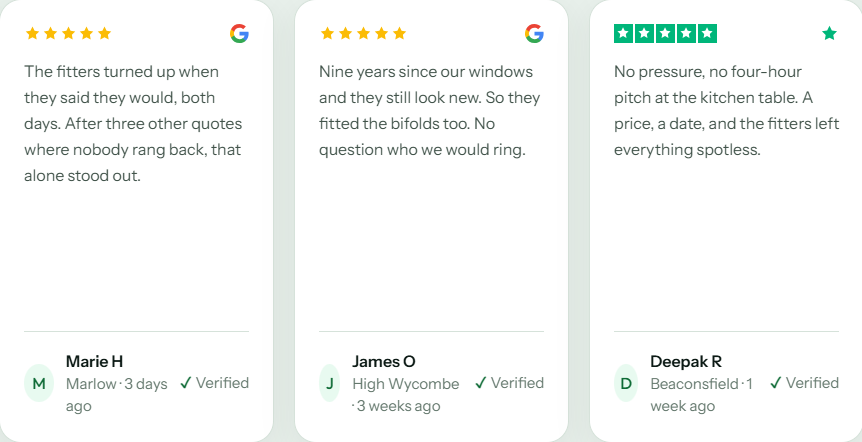
“No pressure, no four-hour pitch at the kitchen table. A price, a date, and the fitters left everything spotless.”
“Can I ask for a quote without the pressure?”
The opening addresses a concern that could stop someone enquiring at all. Placed beside a quote button or form, this kind of feedback supports your promise of a straightforward conversation.
The final sentence adds something else: care during the fitting. Your project photographs show the finished result; customer feedback can describe what it was like having your team in the house.
“The fitters turned up when they said they would, both days. After three other quotes where nobody rang back, that alone stood out.”
“Will they do what they say?”
“Reliable service” is easy to put on a website. A customer describing the fitters arriving as promised gives that claim a concrete example.
For someone arranging time at home for an installation, that detail has a practical meaning. It belongs alongside information about how you organise and carry out the work.
“Nine years since our windows and they still look new. So they fitted the bifolds too. No question who we would ring.”
“Would their customers choose them again?”
This example describes someone doing exactly that. Their earlier experience gave them confidence to return for another installation.
On a bifold page, that feedback is relevant to both the product being considered and the company fitting it. It gives the visitor a reason to look beyond the specification.
Put the reassurance beside the decision.
A homeowner may arrive directly on a product page from Google or an advert. They might never see the reviews on your homepage, and you cannot assume they will visit a separate testimonials page before getting in touch.
Think about what they’re considering at each point. On a bifold page, show relevant installation feedback. On a page introducing your service, use comments about reliability and care. Near the enquiry form, a review about a pressure-free experience can help explain what taking that next step will feel like.
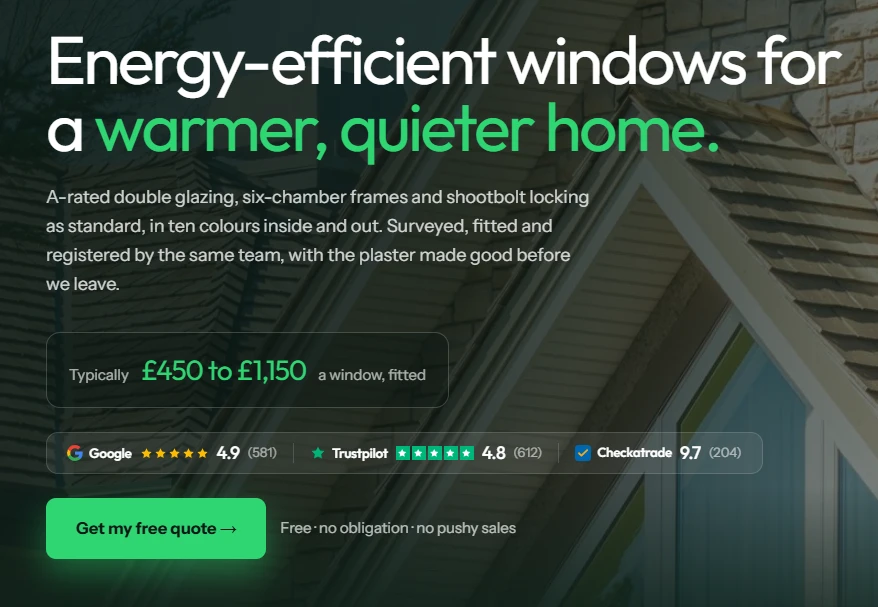
A compact review badge can keep your customer rating visible near the quote button. A readable review alongside it provides the detail behind the stars.
Already showing reviews? Give them a two-minute check.
Open one of your main product pages on your phone. Imagine it is the first page a prospective customer sees, then follow it towards the quote button.
- Can they see customer feedback without having to look for it?
- Does it support the product or service described on the page?
- Is the text comfortable to read on a phone?
- Is there reassurance close to the invitation to enquire?
If your reviews are tucked away at the bottom of the homepage, there may be more useful places for them. An existing display might simply need a clearer layout or a better position.
Relevant feedback can help later too, perhaps alongside a project example in a quote follow-up. But start with the first decision: whether someone feels confident enough to contact you.
Your customers have already put into words what they valued about your business. Give those words a place on the pages that introduce you to the next one.
Want to make more of your customer reviews?
We help glazing businesses bring customer feedback onto their websites using Trustindex. Whether you need a new installation or an upgrade to your existing setup, we can help with the right plan, design and placement.
Recommended articles