
Plan a website redesign that boosts conversions and enquiries
Most website redesigns focus on looks, not leads. Your site might look good but still leave enquiries on the table. Planning a website redesign that prioritises conversions means tackling every detail—from user journey mapping to SEO migration—to turn visitors into customers. This guide shows you how to build a lead generation website that works hard for your business. Check out this resource for more insights.
Crafting a Conversion-Driven Redesign

To boost conversions, let’s focus on strategies that make your website more than just visually appealing. It’s time to set clear goals for your redesign and see how Urban Media’s expertise can guide you.
Prioritising Website Redesign Goals
Start by defining what you want your website to achieve. Is it more leads, higher sales, or increased engagement? Clear objectives will guide your design decisions, ensuring every change is purposeful. While aesthetics are important, remember: it’s all about turning visitors into customers.
Building a Lead Generation Website
Your website should be a lead magnet. Begin by refining your value proposition. What sets you apart, and how can your website communicate this effectively? Use compelling calls-to-action to invite visitors to take the next step. Consider adding forms in strategic spots to capture visitor information easily.
Implementing Conversion Rate Optimisation
Once your site is live, the work isn’t over. Conversion rate optimisation (CRO) ensures your website performs at its best. Tweak headlines, test different layouts, and experiment with button placements. A/B testing can be your best friend here. Small changes can lead to significant improvements in conversion rates.
UX Research and User Journey Mapping
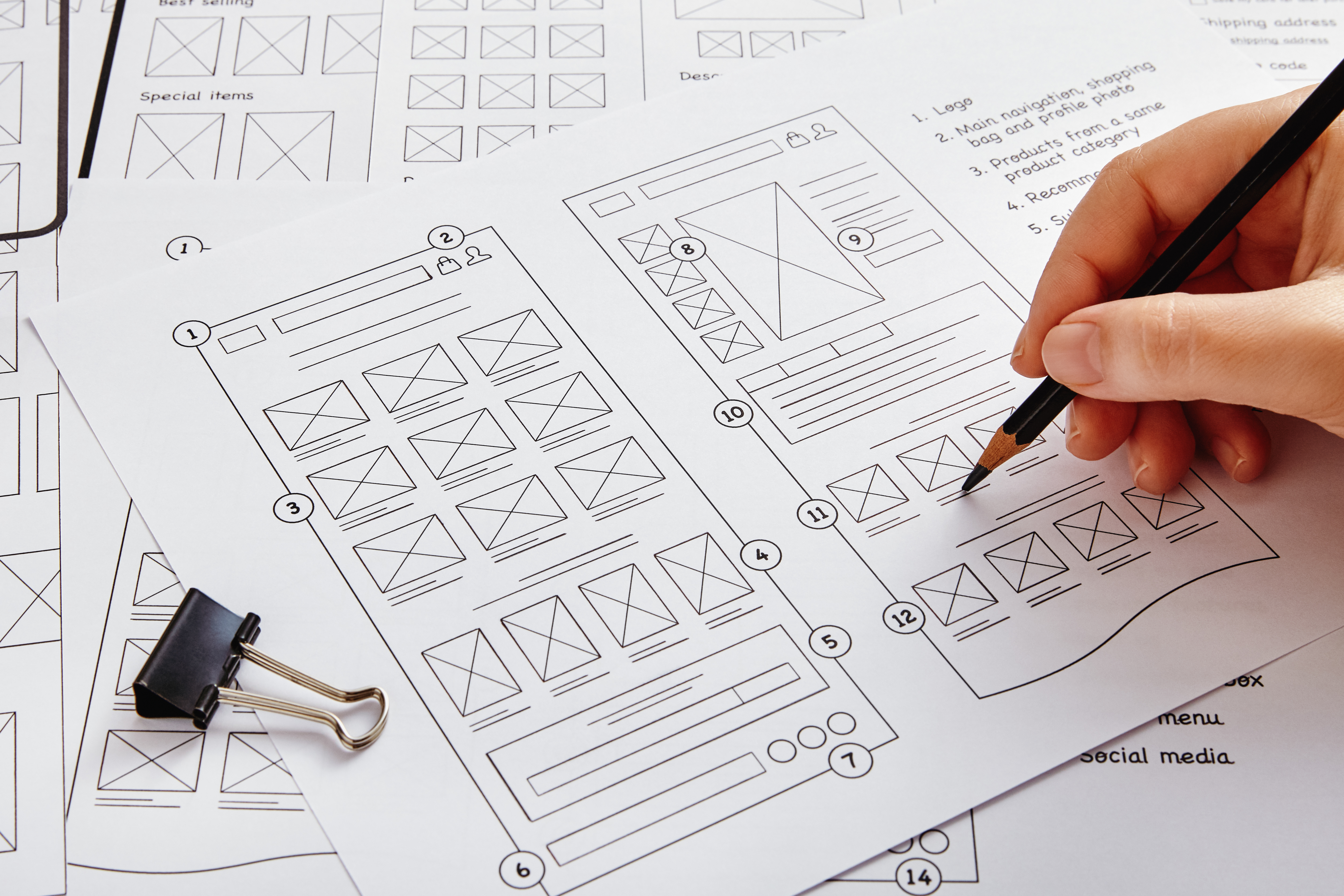
Understanding your users is key to creating a website that serves their needs. Comprehensive UX research will provide insights into user behaviour, while effective journey mapping will guide your design decisions.
Conducting Comprehensive UX Research
To design a site that truly engages, you need to understand your audience. Start with surveys and interviews to gather user feedback. Tools like heatmaps and session recordings can reveal how visitors interact with your site. This data will highlight pain points and opportunities for improvement.
Designing Effective User Journeys
Map out your users’ paths from landing page to conversion. Identify the steps they take and the obstacles they face. Design each page to guide users smoothly to their destination, keeping their needs and goals in mind. Remember: simplicity and clarity are your allies.
Creating an Effective Information Architecture
Organise your website’s information logically. Clear navigation helps users find what they need without frustration. Use straightforward labels and group related content together. A well-structured site not only improves user experience but also boosts search engine rankings.
Technical Aspects of Redesign

A successful redesign also hinges on technical excellence. SEO migration, speed enhancements, and CRM integration are crucial elements that require careful consideration.
SEO Migration and 301 Redirect Mapping
Preserve your site’s search engine visibility during a redesign by planning for SEO migration. Create a detailed 301 redirect map to maintain link equity and avoid broken links. This step is vital for retaining your site’s rankings post-launch. Learn more about this process here.
Enhancing Site Speed and Core Web Vitals
Site speed impacts user experience and search rankings. Use tools like Google PageSpeed Insights to identify areas for improvement. Optimise images, leverage browser caching, and minimise JavaScript. Fast-loading pages keep visitors engaged and reduce bounce rates.
Integrating CRM and Marketing Automation
Combine your website with CRM and marketing automation tools to streamline lead management. A seamless integration ensures that captured data flows smoothly into your sales pipeline. This setup allows for personalised marketing efforts, leading to more effective conversion strategies.
By following these steps, you can craft a website that not only looks great but also delivers results. Embrace the challenge of redesigning with conversions in mind, and turn your site into a powerful business asset.
